Babies Don't Make Own Antibodies Till 18 Months Age
Many cases of thyroid bug are missed because almost doctors don't perform a comprehensive test console. I spent most a decade undiagnosed because I only had i mark tested. My thyroid condition was missed completely, leading me to deal with needless "mystery" symptoms like chronic fatigue, low, anxiety, and many others, for far too long!
I take a copy of my lab results from 2008, earlier I was diagnosed with Hashimoto's and still searching for a reason backside my exhaustion, hair loss, anxiety, and digestive issues. On this lab report, my TSH is at 4.5 μIU/mL, and there is a notation written from the doctor: "Your thyroid function is normal, no need to do anything." Possibly a TSH of 4.5 μIU/mL would take been normal for a 95-year-sometime woman, but I was 25 and sleeping 12+ hours a night to feel rested! Of course, fifty-fifty as a pharmacist, I didn't think to question the dr. — and almost people don't.
If you suspect that you may have a thyroid condition, or know someone who does, this commodity will go over all of the most helpful tests that can help you identify a thyroid status.
This article will also teach you how to understand your labs and so that you can advocate for proper handling for yourself.
In this article, I'll become over:
- The top thyroid tests I recommend
- How to translate your results
- Understanding reference ranges
- How often you should examination your thyroid
- How to use lab results for medication adjustments
Thyroid Tests 101
Testing thyroid hormone levels is the first pace in diagnosing a thyroid disorder and determining the appropriate form of treatment. However, many doctors don't exam for Hashimoto'due south, despite having their patients present with symptoms of thyroid affliction.
All likewise often, conventional doctors only test ane's TSH (thyroid stimulating hormone) and T4 levels (the amount of thyroid hormone circulating in your blood), because these values are tested for a general diagnosis of "thyroid illness." However, these tests don't decipher between hypothyroidism and Hashimoto's, and often don't flag Hashimoto'due south or hypothyroidism until a later stage.
For this reason, it's important to take a full thyroid panel done, which includes not only TSH and T4, merely as well T3, TPO, and TG antibodies (whose presence tin can show how strong the autoimmune attack on the thyroid is).
Additionally, an ultrasound test can assistance to diagnose Hashimoto'due south, too as reveal what'due south happening with your thyroid and run into if there are any nodules present.
I'll go into detail about why each thyroid examination is important below, but I do recommend getting a total thyroid console done then that you lot have all of the information necessary to take accuse of your wellness.
How to Gild Your Lab Tests
If your doctor is ordering the thyroid labs for y'all, be sure to asking a copy so that yous can encounter them for yourself and ensure that they are interpreted correctly.
Additionally, I have included cocky-order options for most of the labs discussed, in case your current md won't order the labs for you.
The self-order options are discounted panels that I set up with Ulta Lab and can be ordered anywhere in the U.S. You lot will receive a lab gild that can exist taken to your local lab, and the results will be sent to you electronically.
You tin can society each private test that I recommend below, or you tin can gild the entire discounted panel (TSH, costless T3, gratis T4, TPO antibodies, TG antibodies) here.
In many cases, y'all can self-gild the labs and then transport the receipts for reimbursement to your insurance. (Please bank check with your insurance Get-go to ensure that they will have this and what their procedure is.)
Now, let'southward accept a look at each thyroid test and what they mean for your thyroid health.
1. The Thyroid Screening Test
The thyroid stimulating hormone, or TSH test, is used as a screening examination for thyroid disease, also as a test for monitoring the correct dose of medication needed for an individual.
TSH is a pituitary hormone that responds to low/high amounts of circulating thyroid hormone. If you're new to thyroid lab testing, information technology may seem counterintuitive, merely an elevated TSH means that you lot exercise non accept plenty thyroid hormone on board and that you are hypothyroid. This is because the TSH hormone senses depression thyroid levels and is released when there is a lack of information technology, in an endeavour to get the body to make more than.
In advanced cases of Hashimoto's and primary hypothyroidism, this lab exam will exist elevated. In the case of Graves' disease and hyperthyroidism, TSH levels volition be low. People with Hashimoto'due south and mild or central hypothyroidism, may have a normal reading on this examination.
If you've been a thyroid patient for a while, you're probably thinking to yourself, "Well, of course, doesn't everyone know that?" — and I have to warn you… I've unfortunately seen physicians who accept mistakenly idea that a low TSH meant 1 had an underactive thyroid, and a high TSH, an overactive thyroid — putting their patients in really dangerous situations past over or under medicating them!
In recent years, The National Academy of Clinical Biochemists indicated that 95 per centum of individuals without thyroid illness, have TSH concentrations below 2.5 μIU/mL, and a new normal reference range was defined past the American College of Clinical Endocrinologists to exist between 0.3-3.0 μIU/mL.
Nevertheless, most labs have not adjusted that range in the reports they provide to physicians, and accept kept ranges as lax as 0.two-viii.0 μIU/mL. Thus, conventional medicine practitioners will probable follow the standard reference range for TSH to determine if a person has hypothyroidism — in some cases, they may even follow a more lax range if the lab they are using hasn't updated their levels, or if the practitioner is former school. This leads to the patient existence told that their thyroid is normal, when in fact, they have a thyroid status.
Thus, many physicians may miss the patients who are showing an elevated TSH. This is one reason why patients should always enquire their physicians for a copy of any lab results.
Functional medicine practitioners have farther defined that normal reference ranges should exist between 1-2 μIU/mL for a healthy person not taking thyroid medications.
When I was in Poland to notice distributors for the Polish version of my offset volume, I happened to visit one of my relatives who was wearing a heavy wintertime coat on a warm spring day. In speaking with her, I was able to tell that she was experiencing a keen number of thyroid symptoms, and she confided that her md had said her thyroid was normal. I looked at her labs, and certain enough, her TSH was around 5 μIU/mL, and she was never tested for antibodies nor offered a thyroid ultrasound.
I have establish that I, as well as many other thyroid patients, experience all-time when my TSH is between 0.5 and 2 μIU/mL. Some integrative professionals will go every bit far as to say that people should have a TSH of right around ane μIU/mL or below 1 μIU/mL, to feel their best.
That said, the TSH examination is not the only examination that should be used to diagnose Hashimoto's since, in the early stages, i'southward TSH level may fluctuate or remain within the normal limits.
Nigh conventional practitioners volition stop farther thyroid testing when they determine the TSH is "normal" (that is, inside the outdated, old school "normal" reference range).
This is why, even if you lot've been told your thyroid is normal, and even if your TSH is between 0.5-two μIU/mL, yous need to test your complimentary T4, free T3, and especially thyroid antibodies (TPO antibodies and TG antibodies), to truly determine if you lot have a thyroid condition.
Recommended test: TSH
Optimal reference range: between 0.5-2 μIU/mL
How often you should test: Every iv-6 weeks when starting a new medication, then every 6 months if symptoms are stable.
Things to consider earlier testing: I recommend testing your TSH early in the forenoon, and delaying your thyroid hormones until later taking the test, to ensure accurate results, especially if you are taking T3-containing medications. Taking your medications before the exam tin suppress your TSH and go far look like you lot are overmedicated when you are not. Additionally, the supplement biotin, commonly used for pilus loss, can likewise suppress TSH levels, making it look like yous are overmedicated, or like you are hyperthyroid. The American Thyroid Association recommends that patients terminate taking biotin for at to the lowest degree 2 days earlier a TSH test.
ii. Thyroid Hormone Level Tests
There are four principal thyroid hormones that have been identified: T1, T2, T3 and T4.
T4 (thyroxine) and T3 (triiodothyronine) are the two main thyroid hormones. T4 is known equally prohormone and is 300 percent less biologically agile than T3. T3 is the main biologically active thyroid hormone and gives u.s. beautiful hair, replenishes our energy, and runs our metabolism.
You lot may have put together that nigh of the commonly prescribed thyroid medications similar Synthroid and levothyroxine, only incorporate T4 (thyroxine), and thus they need to exist converted to the active T3 course in the body.
On paper, the T4 to T3 conversion happens just fine, but in the real world, in real human bodies, nosotros may not always catechumen T4 to T3.
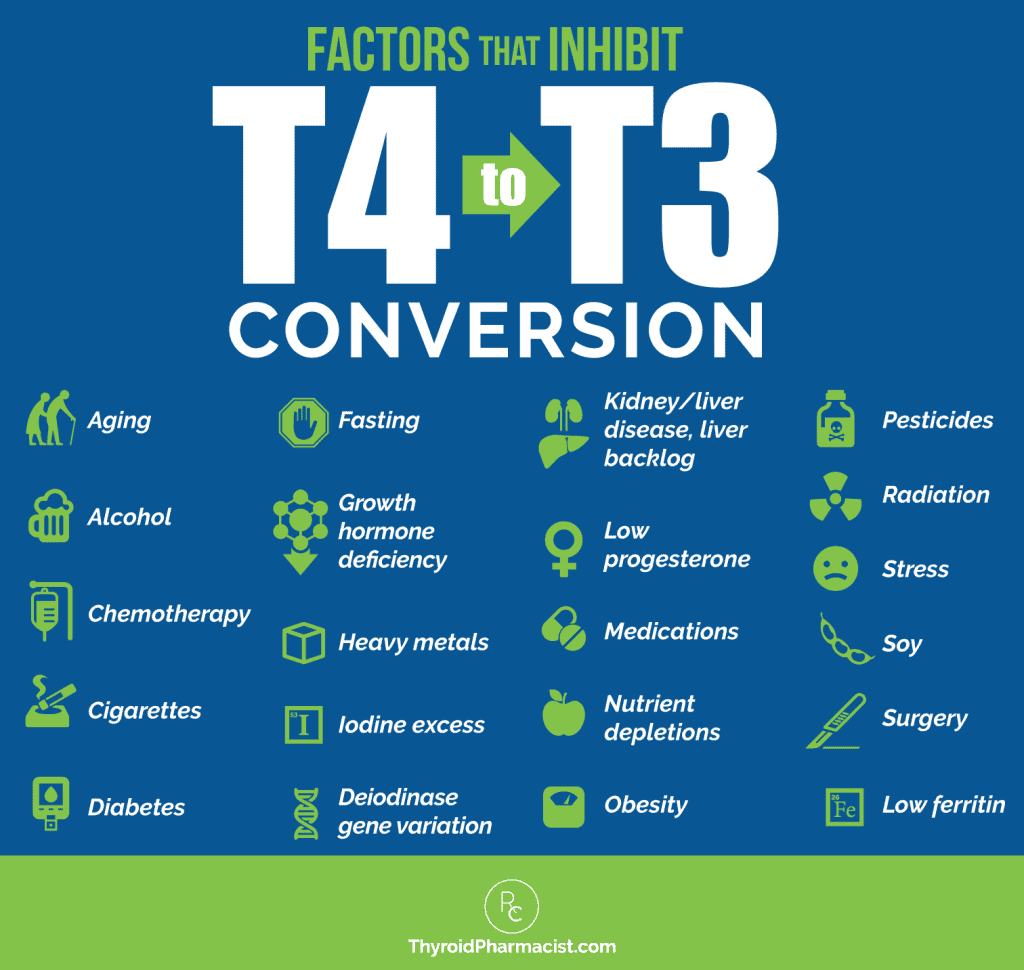
We tin can reveal our T4 to T3 ratios and mensurate the hormone that is available to do its job in the trunk, by testing our free T4 and free T3 levels.
Complimentary T3 and Free T4 tests measure the levels of active thyroid hormone circulating in the torso. (When these levels are depression, but your TSH tests in the normal range, this may lead your physician to suspect a rare type of hypothyroidism known as cardinal hypothyroidism. I'm working on an article on this topic, and then stay tuned!)
Some clinicians may only test for T4, but T3 is too important to test, every bit some individuals may non exist converting T4 to the active T3 properly. Thus, people may have a normal T4, only a low T3 level.
How Do You Know If You Are Converting Correctly?
Have a look at your costless T3 and free T4 levels. Both should be in the optimal range. If the T4 is optimal, simply the T3 is out of the optimal range, you know that your trunk is not making enough T3 hormone from the T4.
Recommended test: Complimentary T3 and Free T4
Optimal T4 reference range: xv-23 pmol/Fifty
Optimal T3 reference range: five-7 pmol/L
How oft yous should exam: Every 4-vi weeks when starting a new medication, every 2-3 months if tracking the affect of lifestyle changes, and and then every 6-12 months once symptoms are stable.
Things to consider before testing: I recommend testing your complimentary T3 and costless T4 early in the morning, and delaying your thyroid hormones until after taking the test to ensure authentic results, particularly if you are taking T3-containing medications. Taking your medications before the test tin can result in a falsely elevated T3 (and sometimes T4), making it look similar you lot are overmedicated when y'all are not. Additionally, the supplement Biotin, commonly used for hair loss, can likewise falsely increment both T4 and T3 levels, making it expect like you are overmedicated, or like you are hyperthyroid. The American Thyroid Association recommends patients stop taking biotin at to the lowest degree 2 days earlier a T4 and T3 test.
3. Thyroid Antibodies
There are various types of antibodies against the thyroid gland that can be detected in thyroid affliction. The presence of thyroid antibodies indicates that the thyroid gland has been recognized as a foreign invader by the immune system and that the thyroid gland is under attack.
In Hashimoto's, triggers contribute to the body developing something called "a lack of self-tolerance." This is when the torso is no longer able to recognize its ain tissue as part of itself, just instead starts viewing its tissue equally a foreign invader. It is no longer "tolerant" of itself, and this is what leads to an autoimmune condition. When the body begins this breakdown of its immune tolerance, we're initially going to see the presence of elevated thyroid antibodies.
In Hashimoto's, about 80 to 95 pct of patients have thyroid antibodies. Thyroid antibodies are going to be the get-go indication of a thyroid problem in many cases. They tin exist elevated for 5, 10, sometimes even 15 years, earlier a change in TSH is even detected. Having elevated thyroid antibodies, even in the presence of a "normal" TSH, ways that it's simply a matter of time earlier your thyroid becomes destroyed to the point it can no longer produce a sufficient amount of hormones.
Some clinicians will say that once you accept thyroid antibodies, you volition always accept thyroid antibodies, so the bodily number doesn't matter, as the antibodies tin randomly fluctuate. I respectfully disagree. Antibodies fluctuate in response to triggers (some as common as stress), and in my exhaustive experience, they can be an incredibly helpful marker for tracking disease progression.
The virtually common antibodies in Hashimoto's are thyroid peroxidase antibodies (TPO antibodies) and thyroglobulin antibodies (TG antibodies). Most people with Hashimoto's will have an height of i or both of these antibodies. TPO antibodies are the most common and have been reported in 5-38 per centum of the population, depending on the written report! Thyroid antibodies are ofttimes elevated for decades before a change in TSH is seen in Hashimoto's.
People with Graves' disease and thyroid cancer may likewise accept an meridian in thyroid antibodies, including TPO and TG. However, the most common antibodies found in Graves' disease are TSH receptor antibodies, including thyroid-stimulating immunoglobulin (TSI) — this marking is elevated in over 90 percent of people with Graves' disease. TSH receptor bounden antibiotic (TRAb), also known as TSH-binding inhibiting immunoglobulin or TBII, is elevated in over 50 percent of people with Graves' disease. (You tin can check for Graves' related antibodies here.)
Thyroid antibodies can be used for diagnostic purposes and monitored to runway remission. As I mentioned, thyroid antibodies betoken an active destruction going on confronting your thyroid. This destruction ofttimes comes with a lot of symptoms that may cause, or exist misdiagnosed as low, panic attacks, feet, miscarriage/infertility, carpal tunnel, hair loss, weight proceeds, fatigue/laziness, and, of course, the near disempowering diagnosis of them all… hypochondria.
Hypochondria is a diagnosis I accept great offense to because it ignores the patient's intuition that there is something incorrect. It oft leads to shame, disempowerment, helplessness, and the devastation of trust we take in our own heed and body connection, as well equally in the healthcare model and of always getting well.
The good news is that when you take elevated antibodies and a normal TSH, you can not only opposite all of your symptoms, but y'all can besides prevent harm to your thyroid gland.
I found out I had thyroid antibodies in the 2000 IU/mL range one yr before doing a thyroid function retest, when my thyroid function deteriorated to the signal where my medico idea I would benefit from medications. Unfortunately, the doctor that initially ran the antibody examination, told me not to worry about them and that there was nothing I could do anyhow. I am oft saddened that I trusted another person with my health and didn't do additional research on my ain. I was also highly symptomatic at that time, likely due to the elevated TPO antibodies. I had new onset panic attacks, social anxiety, hair loss, digestive issues, and fatigue — common early symptoms of elevated thyroid antibodies.
Every bit a 25-year-old newlywed who had just moved to a new urban center, I was crippled by my wellness. Instead of focusing on being a newlywed, making my wedding albums, and coming together new friends, I felt similar I was falling autonomously. The crazy thing is, I am at present in my belatedly 30's, with a busy business and a sweet toddler that yet wakes at night, and I feel 10 times more energetic than I did in my 20'due south! I no longer grieve the decade I lost to undiagnosed Hashimoto's, just this is why I'k and so passionate near advocating for you lot to get the proper tests, and for you lot to understand your tests!
Thyroid antibodies may exist elevated for many years earlier a change in TSH is seen, and finding antibodies early can often prevent damage to the thyroid, also as aid with preventing the need for long-term medications.
Equally mentioned earlier, thyroid antibodies can too be used as a marker to monitor disease progression and remission. While whatever elevation of thyroid antibodies can indicate Hashimoto's (and some may take seronegative Hashimoto's with thyroid antibodies not elevated at all), I like to monitor thyroid antibodies in clients. While non all clinicians volition agree to the following ranges, based on research and my clinical experience, hither are the numbers I keep in mind:
- Thyroid antibodies to a higher place 500 IU/mL are considered a very ambitious case of Hashimoto'due south
- Antibodies under 100 IU/mL indicate remission, or a less aggressive case
- Antibodies under 35 IU/mL mean yous no longer examination for Hashimoto'southward co-ordinate to conventional medicine standards
- Antibodies under ii IU/mL are optimal (scientists believe that there may be some antibodies present as part of a normal repair process)
I recommend a lot of strategies to make the condition less aggressive and to put information technology into remission, in my article on reducing thyroid antibodies, besides every bit in my books Hashimoto's: The Root Cause and Hashimoto'south Protocol . Be sure to cheque them out to learn how to lower your antibody levels.
Recommended tests: TPO, TG for Hashimoto's (and TSI, TBII for Graves')
Optimal TPO reference range: <2 IU/mL
Optimal TG reference range: <2 IU/mL
Optimal TSI reference range: < 0.55 IU/L
Optimal TBII reference range: 16-100 percent inhibition of TSH bounden
How oft you should exam: I recommend monitoring thyroid antibodies every 60-90 days to see if the changes you're making in your lifestyle are helping you. A reduction in these antibodies, specially when accompanied past a reduction in symptoms, is a adept indication that your condition is improving and that you are on the right path with your healing interventions.
4. The Thyroid Ultrasound
Some individuals may take thyroid disease but may not have detectable alterations in their blood work. In fact, research suggests that 10 to 50 percent of people with Hashimoto'due south may not test positive for antibodies. In these cases, a person might have a less aggressive version of Hashimoto's known every bit antibody negative or seronegative Hashimoto's.
In these cases, a thyroid ultrasound can be used to observe physical changes in the thyroid gland that betoken to Hashimoto's.
A thyroid ultrasound will assist yous and your physician determine whether yous have changes consistent with Hashimoto's (such as a rubbery thyroid, shrunken thyroid, enlarged thyroid, or abnormal growths in the thyroid that are present). Some growths may signal an autoimmune process, others may signal benign nodules, and others may signal cancerous nodules.
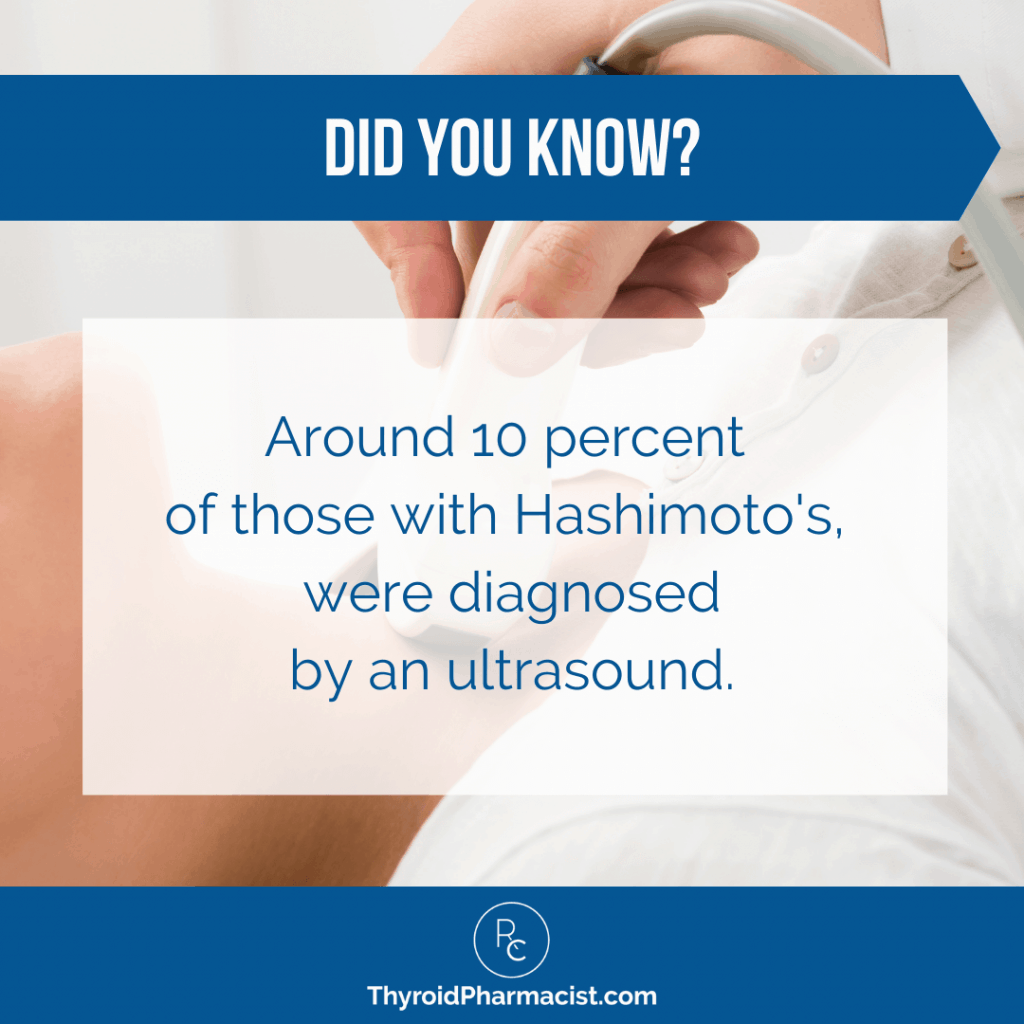
10 percent of people diagnosed with Hashimoto'southward are diagnosed using an ultrasound, and I recommend that everyone with Hashimoto'southward or thyroid disease get at least one ultrasound in their lifetime, especially women of childbearing age. If thyroid nodules are found, and then I recommend having an annual ultrasound. (BTW, be sure to read my comprehensive article on shrinking thyroid nodules if you lot happen to have them.)
A thyroid ultrasound is a very simple, not-intrusive test that only takes about ten minutes. Information technology uses sound waves to image the thyroid. A lubricant jelly is placed on the skin and a minor hand-held transducer is passed over the thyroid. The ultrasound will show any change in gland size and texture. Clinicians can detect changes in thyroid size (shrunken or enlarged), tissue density and texture (rubbery), as well as nodules (aberrant growths), which are all characteristic changes found with Hashimoto's. Growths can also be a signal for cancerous nodules. If at that place is a concern with that, the adjacent stride would be to have a nodule biopsy, and you lot can read more about that in my article on thyroid cancer.
Recommended tests: needs a medico's order
How frequently you should test: I recommend at least one ultrasound for every person, specially women of childbearing historic period.
5. The Reverse T3 Test
The reverse T3 (rT3) test measures how much of the agile free T3 hormone is able to demark at thyroid receptors. RT3 is produced in stressful situations and binds to thyroid receptors, but turns them off instead of activating them. (Stress is a common cause of low T4 to T3 conversion. Under stressful situations, T4 gets converted to reverse T3 instead of to T3. Reverse T3 is an inactive molecule related to T3, just without any physiological action.)
The rT3 exam is sometimes used to identify cases of poor T4 to T3 conversion, as well every bit thyroid symptoms that are due to adrenal stress, instead of thyroid malfunction or autoimmunity.
However, in most cases, this exam doesn't alter my recommendations, so I consider this an optional test. (I prefer the adrenal saliva test to make up one's mind the proper handling for adrenal stress. An adrenal saliva test gives u.s. the advantage of knowing how to address the reason one is producing too much contrary T3.)
The gratuitous T4/complimentary T3 exam is more useful for me to determine if a person is properly converting thyroid hormones. In cases where a lot of reverse T3 is produced, adding a thyroid medication that contains T3 ensures that the right hormone is getting to the right receptors.
That said, many integrative doctors dear the reverse T3 test, and it may be a useful test to monitor your improvement.
When assessing your rT3 results, it is important to watch for trends of your levels going up. This unremarkably indicates your trunk is reacting to a stressful situation. Your body produces rT3 to give it a suspension and to forestall yous from condign hyperthyroid. This is an evolutionary adaptation to deadening your metabolism in times of famine (for more information on this, take a wait at my Safe Theory). High rT3 due to stress has a snowball effect on hypothyroid symptoms. The accommodation by the trunk producing rT3 is non useful in our high-demand society when we must work and accept care of our children, spouse, parents, etc.
Recommended tests: Reverse T3 (rT3)
Optimal rT3 reference range: eleven-18 ng/dl
How often yous should test: Every six months, if recommended past your integrative medico.
6. Your Symptoms
Terminal but non least, your symptoms should serve as an important thyroid test. Be sure to mind to your body — merely you know its subtle messages!
Our symptoms offer vital clues equally to what is going on inside our bodies, and these symptoms tin shift as our thyroid hormone levels alter.
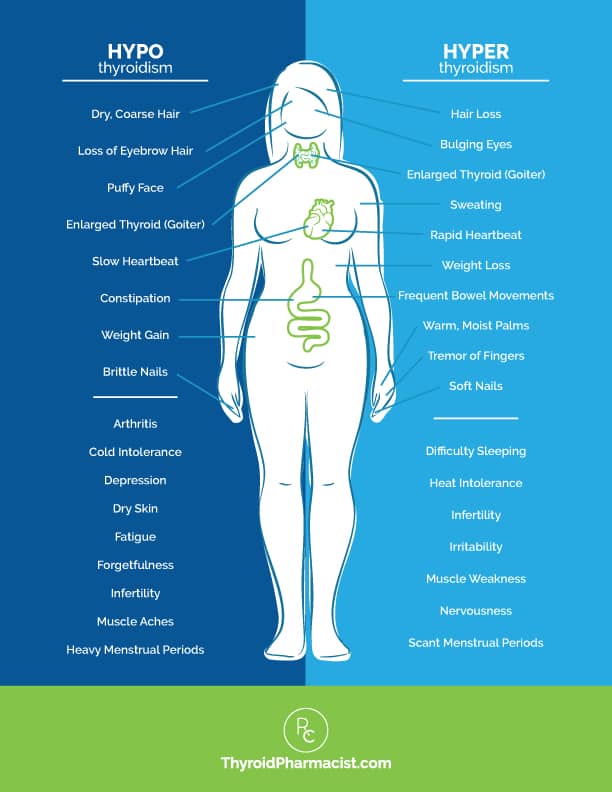
Do yous have whatsoever symptoms of hypothyroidism, or deficiency of thyroid hormone, such as:
- Slower metabolism leading to weight proceeds
- Forgetfulness
- Feeling cold or common cold intolerance
- Depression
- Fatigue
- Dry pare
- Constipation
- Loss of appetite
- Dry, coarse hair
- Musculus cramps
- Stiffness
- Joint pain
- A loss of the outer third eyebrow
- Heavy menstrual periods
- Infertility
- Muscle aches
- Puffy face
- Slow heartbeat
- Brittle nails
- Arthritis
Or, practise you have any symptoms of hyperthyroidism, or an overabundance of thyroid hormone, such equally:
- Weight loss
- Palpitations
- Feet
- Center jutting
- Tremors
- Irritability
- Exceptional menstrual periods
- Fatigue
- Heat intolerance
- Increased appetite
- Hair loss
- Enlarged thyroid gland
- Sweating
- Frequent bowel movements
- Infertility
- Soft nails
- Warm, moist palms
- Finger tremors
- Insomnia
- Muscle weakness
- Nervousness
In addition to many of they symptoms we oft see associated with hyper- and hypothyroidism, Hashimoto's commonly presents with:
- Anxiety
- Depression
- Weight proceeds
- Mood swings
- Fatigue
- Brain fog
- Cold hands and anxiety
- Gastrointestinal issues
- Food sensitivities
Some of these symptoms may exist straight related to insufficient thyroid hormone. Others may be due to related issues (i.e. gut infections), which are seen in many people with Hashimoto's. That's why information technology'south important to identify the root causes of YOUR Hashimoto's, then yous can take the first steps toward healing!
Recommended tests: Create a health timeline and utilize a notebook or nautical chart to go on runway of your symptoms.
Reference Range: Score the severity of your symptoms from 1-10, and aim to steadily lower your score by uncovering and addressing your root causes.
How oft yous should examination: I recommend assessing your symptoms on a weekly basis until you feel y'all have eliminated them.
Interpreting Your Labs
Once you accept your labs, what practise you practise with them? What do they mean?
I frequently get messages from readers asking me to comment on their thyroid labs. Of course, I tin't provide medical advice through the internet without doing a personalized comprehensive case review (this is for your ain safe as well as due to professional liability laws), then I wanted to write this lilliputian guide for you all to empower y'all to sympathize your own labs.
Please note, this evaluation is based on optimal functional medicine ranges and my clinical feel, and may not be recognized by doctors who are non familiar with functional medicine.
Optimal Reference Ranges
When I look at my client'south labs, I'm focusing on optimal reference ranges. Hither's a handy reference chart I created for Hashimoto's, based on recommendations from the Constitute of Functional Medicine:
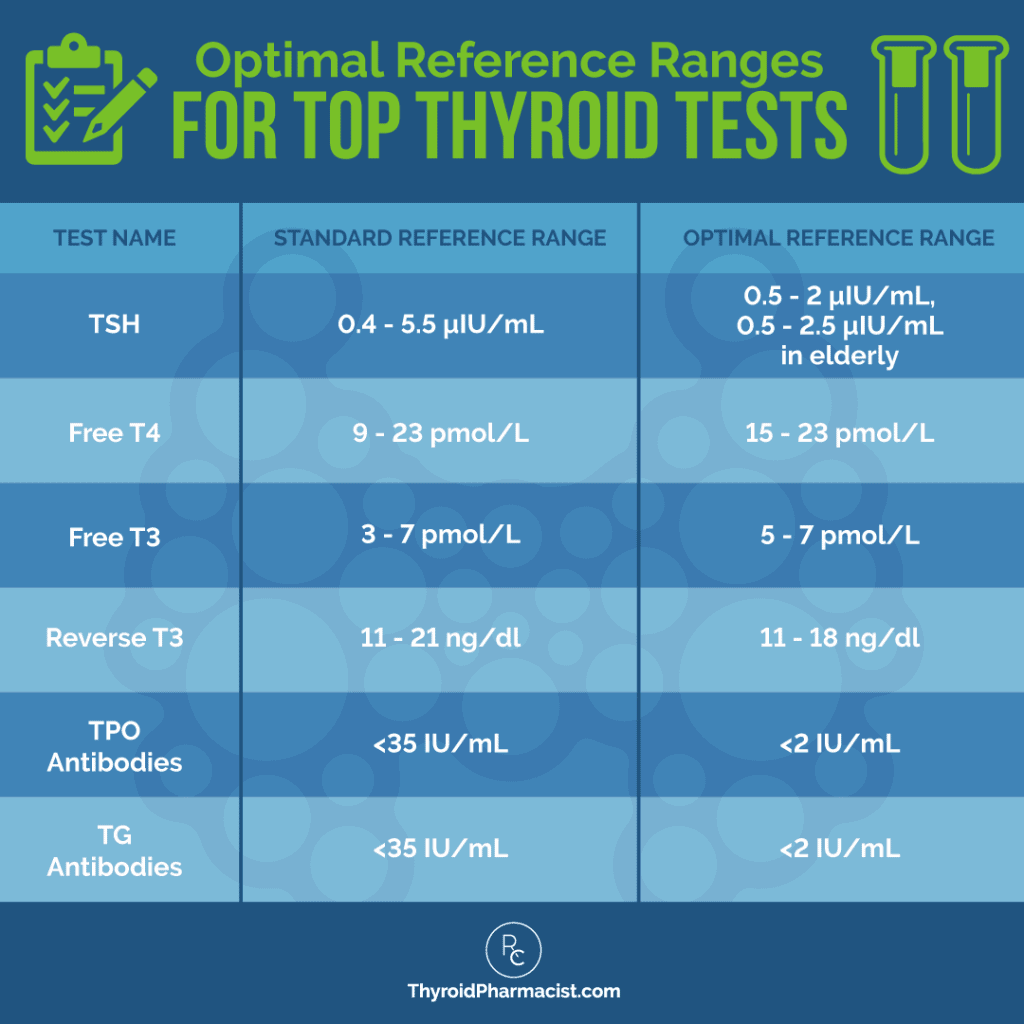
The handy chart below explains what the thyroid lab numbers hateful:
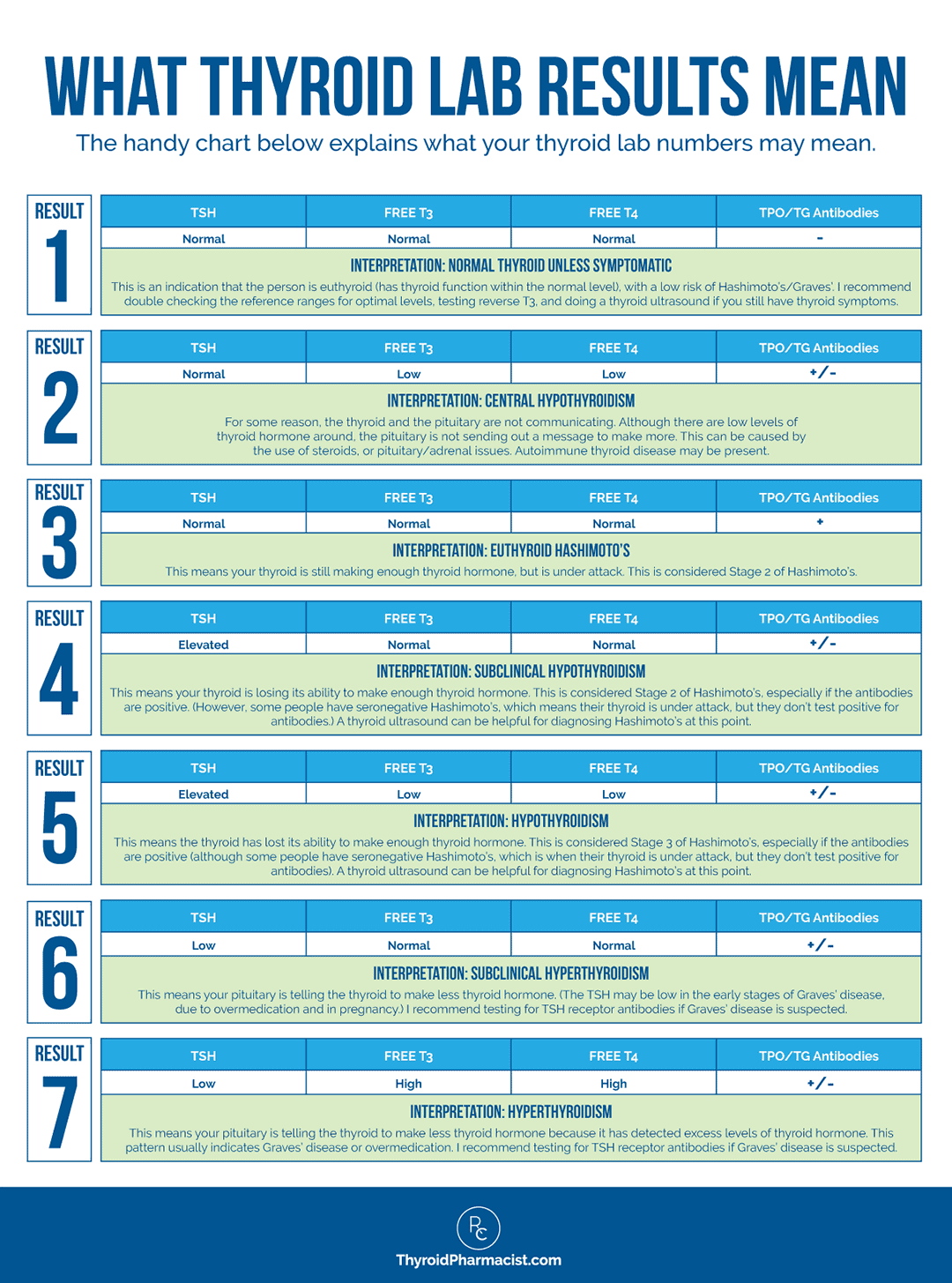
Your optimal thyroid numbers are going to be different from your mother's optimal thyroid numbers, which are going to be different from your neighbor'south optimal thyroid numbers, and then it's important for yous to track your thyroid symptoms while tracking your numbers, to determine your "personal best."
Understanding Thyroid Labs for Medication Prescriptions and Adjustments
Thyroid labs, especially TSH, gratis T3, and free T4, are going to be critical for determining if you need to get-go, increase, or reduce the dose of your thyroid hormone medications, as well as if you're on the right thyroid medications.
Some physicians who prescribe thyroid medications will not prescribe a medication unless the TSH is to a higher place ten μIU/mL, and volition exist satisfied when a person who is taking thyroid meds has a TSH under 10 μIU/mL. I think this is the reason why many people go on to have fatigue, common cold intolerance, difficulty with weight loss, and hair loss — despite taking thyroid medications.
When the TSH is between 2.five μIU/mL and x μIU/mL, and/or when T3 and T4 are within normal limits, this is known as subclinical hypothyroidism. This means that the thyroid is still able to make enough thyroid hormone, merely not without sacrifice. At this bespeak, our thyroid is working overtime, leading to many of the common symptoms of hypothyroidism.
The thyroid is constantly getting a bespeak to make more than and more hormone, and your trunk is likely running out of nutrients (like selenium) to make more hormone. This results in additional inflammation to the thyroid, attracting more than antibodies and fueling the autoimmune process. As many equally 5 percent of people with subclinical hypothyroidism volition progress to overt hypothyroidism each year due to this.
What Near Thyroid Medications for Subclinical Hypothyroidism?
Starting thyroid medication in subclinical hypothyroidism is considered controversial by endocrine groups. Exceptions are made for women who are contemplating pregnancy and for those who take overt hypothyroid symptoms. Guidelines clearly country that in order to avoid pregnancy complications and impaired development of offspring, women with subclinical hypothyroidism demand to be treated with thyroid hormones.
At this stage, many patients may also opt to "expect and run across" and may forgo thyroid medications in an try to "do it naturally." I know that I was i of those people, and I waited six months to become on medications after my diagnosis, but knowing what I know at present, I am in favor of starting medications for subclinical hypothyroidism.
Why?
Korzeniowska and colleagues at the Medical University of Gdansk found that treating children with subclinical hypothyroidism with thyroid hormones, resulted in a decrease of inflammation. This ways that the medications gave their thyroids a residue and resulted in a slowing downward of the autoimmune assail, manifested past lower levels of thyroid antibodies.
Additionally, most patients with subclinical hypothyroidism experience so much better when they start on thyroid hormones.
Personally, when I was first diagnosed with subclinical hypothyroidism, I didn't want to accept medications because I felt like it would be giving up, and that I should figure things out naturally. At that betoken, I started weekly acupuncture sessions, eating Brazil nuts, and using all kinds of magic hair potions to endeavor to keep my hair loss at bay (I was yet a immature butterfly then).
I wanted to believe that these interventions were keeping me from getting worse… until my husband and I took a red-eye flight from Los Angeles to visit friends on the East Coast in the winter. The lack of sleep combined with the cold weather put me in a hypothyroid flare.
I spent the entire weekend shivering, tearful, and anxious, and was very embarrassed nearly how much I inconvenienced our friends.
Afterwards I flew dorsum to California, I spent a few days getting nourishment from the sun and made an appointment to start medications. I felt much improve when I did, and thus I'one thousand no longer a proponent of being a martyr for a senseless crusade. Part of loving yourself is knowing when you demand help.
If I could do it over, I would have, of course, gone gluten, dairy, and soy free for iii months every bit presently as I had found out I had Hashimoto's AND started medications. If a three month trial of nutrition didn't outcome in significant improvement, I would have started digging for my root cause.
After all, when my TSH was at 4.v μIU/mL, I was sleeping for 12+ hours, and at 3 μIU/mL, my hair began to tangle. I didn't realize how hypothyroid I was until I was appropriately treated. A little change in the dosage of thyroid medication can brand a huge difference.
What About Those Already on Thyroid Medications?
If yous're already on thyroid meds, but yet have symptoms, you lot may need to up your dosage and then that your labs fall within the optimal range, which in turn can aid you feel better.
Please take a await at my commodity on TSH for a alphabetic character that you can accept to your physician if he/she is not familiar with the current optimal reference range. As I mentioned before, I personally feel all-time with a TSH a bit under 1μIU/mL, simply you may need some trial and error to find your personal best TSH.
In one case you constitute a dose of medication that'south working for you — and as long as your symptoms don't change (look out for feet and palpitations equally potential signs of an overdose, and fatigue and hurting as potential signs of an underdose) — you tin test your thyroid hormones every 6 months.
Y'all may desire to read about the different hormone preparations in my article A Pharmacist's Review of Medications for Hashimoto'southward and Hypothyroidism.
The Takeaway
It can be a little bit overwhelming to figure out where to start with testing, just I hope the information in this article has helped yous understand which thyroid tests you lot demand to ask for, and how to interpret and human activity on the results.
In summary:
- If you suspect that you may have Hashimoto'south or hypothyroidism, I recommend that you get the following tests for diagnostic purposes: TSH/costless T3/free T4 and TPO/Tg antibodies, thyroid ultrasound
- If you suspect that you may have Graves' affliction or hyperthyroidism, I recommend that yous get the following tests for diagnostic purposes: TSH/free T3/free T4, a thyroid ultrasound, TSI and TBII antibodies
- If you lot are monitoring your response to thyroid hormones or thyroid-suppressing medications, I recommend checking your TSH, free T3 and free T4 levels every four-half-dozen weeks.
- If you are monitoring for remission, I recommend testing TPO antibodies and TG antibodies for Hashimoto's, or TSH receptor antibodies for Graves', every 90 days.
I hope y'all found this article helpful in navigating your thyroid tests. Equally e'er, my goal is to empower you to have charge of your own thyroid health and feel your very best!
Was this article helpful? Did you accept an "aha" moment? Exercise you have additional questions for me about labs?
I'd love to give you my 100-page eBook Optimizing Thyroid Medications (a $19.99 value!) for free! This eBook does a deep dive into the various thyroid medication options available, how to take them properly, and how to piece of work with your doctor to go the correct medication and the correct dose.
P.Southward. You can besides download a free Thyroid Diet Guide, x thyroid-friendly recipes, and the Nutrient Depletions and Digestion chapter of my showtime book, for free. You will also receive occasional updates about new research, resources, giveaways and helpful information.
To stay connected, please join my Facebook and Instagram pages, where yous tin ask questions and interact with the thyroid community!
References
- Katarzyna K, Jarosz C, Agnieszka South et al. 50-thyroxine Stabilizes Autoimmune Inflammatory Procedure in Euthyroid Nongoitrous Children with Hashimoto's Thyroiditis and Type ane Diabetes Mellitus. Journal of Clinical Research in Pediatric Endocrinology. 2013;5(4):240-244. doi:10.4274/jcrpe.1136.
- Khandelwal D, Tandon N. Overt and subclinical hypothyroidism: who to treat and how. Drugs. 2012;72(one):17-33. doi:10.2165/11598070-000000000-00000
- Lukaczer, D. Assessment and Treatment of Thyroid Dysfunction. Institute of Functional Medicine. September 2017.
- Barbesino G, Tomer Y. Clinical Utility of TSH Receptor Antibodies. The Journal of Clinical Endocrinology & Metabolism. 2013;98(6):2247-2255. doi:x.1210/jc.2012-4309.
- Katzman BM et al 2018 Prevalence of biotin supplement usage in outpatients and plasma biotin concentrations in patients presenting to the emergency department. Clin Biochem. Epub 2018 Jul xx. PMID: 30036510.
Notation: Originally published in February 2015, this commodity has been revised and updated for accurateness and thoroughness.
Source: https://thyroidpharmacist.com/articles/top-10-thyroid-tests/
0 Response to "Babies Don't Make Own Antibodies Till 18 Months Age"
Post a Comment